San Sisto College is a Catholic girls' secondary school in Carina, Brisbane, educating approximately 800 students from Years 7-12 in a welcoming and personalised learning environment.
Our size is one of our strengths. Every student is known, supported, and challenged by dedicated staff who understand her individual strengths, interests, and aspirations. We combine the benefits of a close-knit community with a broad range of academic, sporting, cultural, leadership, faith, and co-curricular opportunities.
- Approximately 800 students, allowing for a personalised educational experience.
- An all-girls Catholic education for students in Years 7-12.
- More than 65 years of educating young women in Brisbane.
- A broad curriculum including academic, vocational and applied learning pathways.
- Contemporary facilities including specialised STEM, arts, languages, sporting and hospitality spaces.
- Extensive opportunities in music, sport, leadership, outreach, cultural tours, clubs and enrichment programs.
- A strong focus on student wellbeing, belonging, and personal growth.
- Three distinct learning communities that support students through every stage of their secondary schooling: Years 7-8, Years 9-10 and Years 11-12.
Graduates leave San Sisto as confident and courageous young women who are ready to lead with integrity, embrace new opportunities, and make a positive difference in their communities and beyond.
Our Mission, Values, and Vision:
As a Catholic community in the Dominican tradition, we nurture, challenge, and shape the heart, mind, and spirit of each young woman through the lived experience of the Gospel. Grounded in our core values of truth (Veritas), joy, faith and prayer, justice and compassion, community and service, and a love of learning, we empower people of integrity to seek truth and beauty, connect deeply with God and others, respect all creation, engage passionately with learning, and live in hope.
Our History
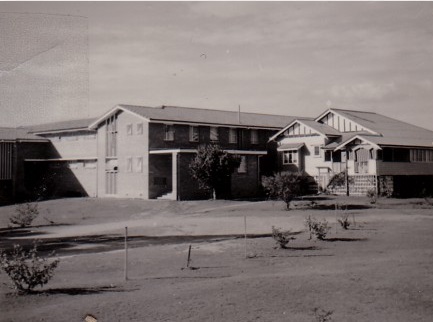 Founded in 1961 by the Dominican Sisters, San Sisto College takes its name from the historic convent in Rome given to St Dominic in 1220. The College opened with just nine students and three Sisters, initially using a single classroom before expanding into purpose-built facilities to support a growing community.
Over the decades, San Sisto has transformed into a modern educational center—developing dedicated academic blocks, state-of-the-art facilities, and the Siena Centre sports auditorium. Administered under the Brisbane Catholic Education Archdiocese since 1978, the College now welcomes students from dozens of primary schools across Brisbane.
Throughout our growth, we remain deeply rooted in our 800-year Dominican heritage and the motto Veritas (Truth)—inspiring our students to seek truth, act with integrity, and live out Gospel values.
Our Student Journey
San Sisto College is organised into three schools, supporting students through each stage of their secondary education. As students progress through the College, they belong to a school community that reflects their growth, development and learning journey. Each school is named after a significant place in the life of St Dominic, honouring our Dominican heritage and charism.
Caleruega – Year 7 and 8
Dominic, son of Felix de Guzman and Jane of Aza, Spanish nobility, was born between 1171 and 1173 in the Castilian village of Caleruega. In this small village in northern Spain, set amidst green fields, he spent the early years of his life. He learnt valuable lessons, including the value of study from his parents and his uncle, who was an Archbishop in a nearby town.
Fanjeaux – Years 9 and 10
Fanjeaux, located in the south of France, is a small village perched on a hill, overlooking fields fills with the sunflowers in the spring. By the time Dominic arrived in Fanjeaux, he was in the middle years of his life. He had become a priest and had shown himself to be not only a man of academic ability but a man of spiritual depth, possessing compassion for people and commitment to sharing the Gospel. The story is told that something time in 1206, at the edge of Fanjeaux, Dominic stood thinking and praying about what to do for some women who had some to him for help. It said that in that sport overlooking the fields below he experienced the Seignadou, ‘sign from God’, a light settling over the nearby Church of Sainte Marie de Prouihle, which affirmed it as this place where he would establish a community of women who would later become the first Dominican community.
Bologna – Years 11 and 12
All of his priestly life, Dominic travelled the roads of Europe, mostly those of Spain, France and Italy. Towards the end of his life he found himself in Bologna, Italy – first in 1220 and then 1221, both times for General Chapters of the Order. These gatherings included Dominicans from all provinces coming together to discuss the work of the Order and make decisions about the future. The Order of Preachers (Dominicans) was flourishing. Men and women were joining Dominic to spread the Gospel message of love for all people. The vision, energy, hard work and commitment of Dominic and many others had come to fruition. Dominic died in Bologna in 1221 and is buried in the Basilica of San Domenica (formerly the Church of San Nicolo dell Vigne).
Our Houses
Jude (Green)
Sister Mary Jude was born in Dalby, Queensland, in 1909. After encountering the Dominican Sisters during her education, she joined the Order and dedicated her life to Catholic education. Sister Jude played a significant role in establishing and leading San Sisto College, serving as Principal from 1961 to 1965. She is remembered for her love of learning, commitment to young people, kindness, faith and service to the community. Her influence continues to shape the spirit and mission of the College today
Dominic (Yellow)
Saint Dominic de Guzman was born in Caleruega, Spain, between 1171 and 1173. Deeply committed to sharing God's truth and love, he founded the Order of Preachers, now known as the Dominican Order. Dominic believed that all creation is good and loved by God, and dedicated his life to preaching, study and service. Today, the Dominican family includes priests, sisters, nuns and lay people across the world who continue his mission of seeking and living the truth.
Rose (Red)
Saint Rose of Lima was born in Peru in 1586 and became the first saint of the Americas. A member of the Dominican Order, Rose was known for her life of prayer, humility and service to those who were poor, sick and in need. Her deep faith, patience and self-sacrifice inspired many, and her legacy continues to demonstrate compassion and care for others.
Catherine (Blue)
Saint Catherine of Siena was born in Italy in 1347 and became one of the most influential figures in the history of the Church. Despite living through a time of conflict and division, Catherine courageously advocated for truth, peace and justice. She was a gifted writer, theologian and peacemaker who devoted her life to serving others, particularly the poor and vulnerable. Catherine is recognised as a Patron Saint of Europe.
© Brisbane Catholic Education, San Sisto College (2026).